Dry inhalation: breathe in your essential oils anywhere
Abyss Glass
You would like to enjoy your essential oils during the day, but you have no diffuser to hand and no wish to apply them to your skin. Good news: the simplest method requires almost nothing. Dry inhalation consists of breathing in an essential oil placed on a support, a handkerchief, a stick, a piece of jewelry, to feel its effects within a few seconds. Here is how to practice it correctly, on which support, with which oils, and the precautions to keep in mind.
What is dry inhalation?
Dry inhalation means breathing in an essential oil directly, without water or heat. You place a few drops on a dry support, hence the name, and breathe in the scent a few centimeters from your nose. Unlike wet inhalation (drops in a bowl of hot water), there is no steam, no equipment and no preparation.
It is the gentlest and most accessible use of essential oils: you don't swallow them, you don't apply them to the skin, you simply breathe them in. It is also the heart of olfactotherapy, the art of enjoying essential oils through the sense of smell.
Why it is the simplest and fastest method
Smell is a sense apart: when you breathe in a scent, the odor signal reaches the area of the brain that manages emotions in a fraction of a second. That is why a scent can soothe you or get you back on your feet almost instantly.
Dry inhalation takes advantage of this natural shortcut. No digestion, no passage through the skin: just a short path between the nose and the brain. As a result, it is immediate, it requires no equipment, and it can be done anywhere, at the office, on public transport, at home.
How to do a dry inhalation, step by step
The practice comes down to a few simple gestures:
- Place 1 to 2 drops of essential oil on a dry support: a cloth or paper handkerchief.
- Bring the support to within a few centimeters of your nose, without pressing it against your skin.
- Breathe in slowly and deeply, two to three times, closing your eyes if you wish.
- Repeat during the day as needed, without overdoing it.
That's all. A few breaths are enough: dry inhalation is not a regimen, it is an occasional gesture that you repeat when you feel like it.

What support should you use for dry inhalation?
The handkerchief is the great classic, but it is not the most practical in everyday life. Here is an overview of the possible supports:
- The handkerchief, free and immediate, but it gets lost, the oil evaporates quickly and the gesture is not very discreet.
- The aroma stick, a small portable tube to breathe from; practical and functional, even if it remains an accessory that you have to take out and then put away.
- The porous pebble, which releases a gentle scent when placed on a desk, but cannot be carried on you.
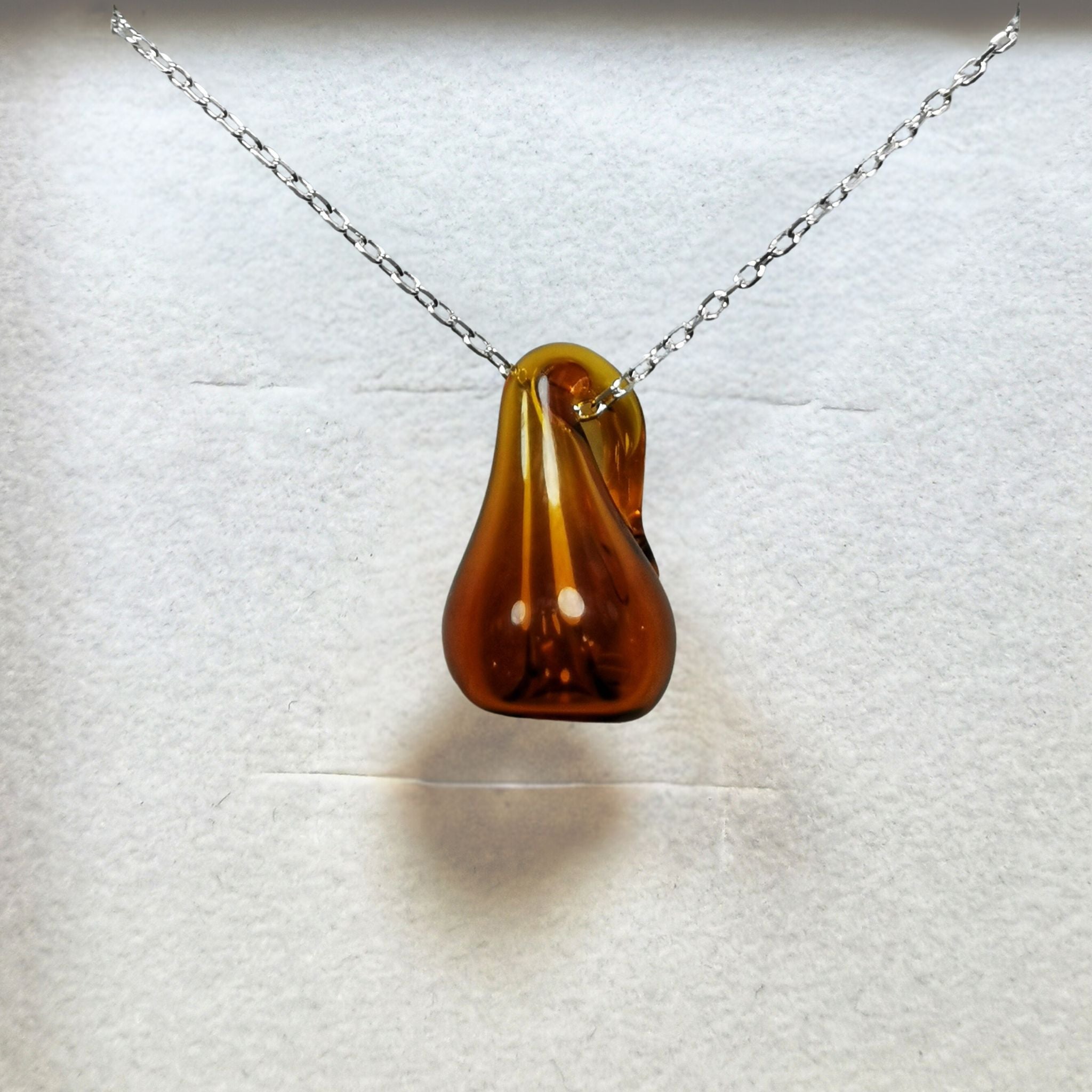
- Olfactotherapy jewelry, a pendant designed to hold a few drops of oil: the scent stays close to you all day, within reach of your nose, with nothing to take out.
For a complete overview of on-the-go methods, see our guide using essential oils without a diffuser.
Which essential oils and which precautions
To start, turn to gentle, versatile oils: sweet orange or true lavender to calm down, peppermint or lemon for a pick-me-up, eucalyptus globulus for respiratory comfort in the cold season.
Precaution: even when inhaled, some essential oils, including peppermint and eucalyptus, are not recommended for pregnant or breastfeeding women, young children and people with epilepsy. Always check the contraindications specific to the oil you are using, stick to gentle, occasional inhalation, and ask a healthcare professional for advice if in doubt.
Dry inhalation, more elegantly: olfactotherapy jewelry
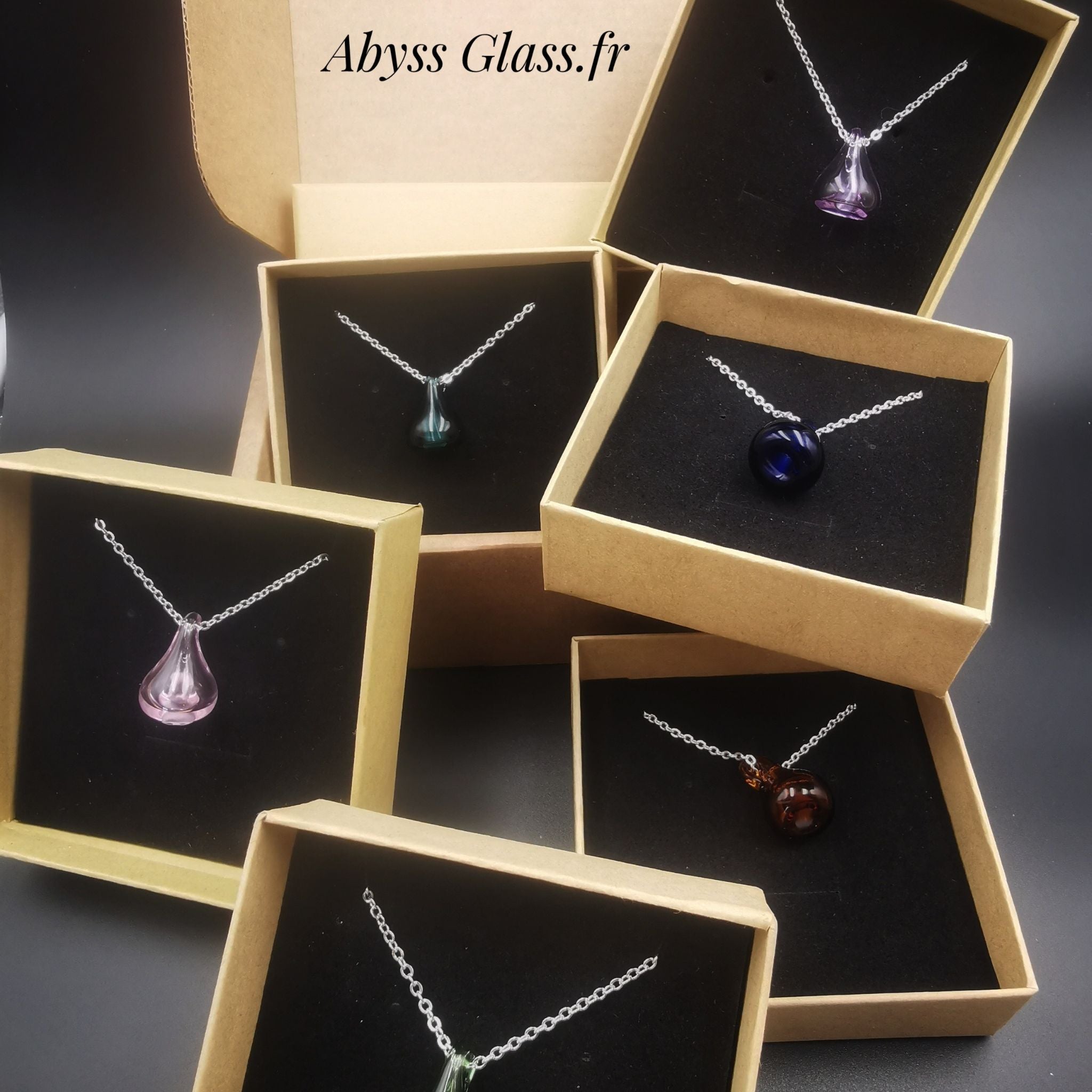
The principle of olfactotherapy jewelry is exactly that of dry inhalation, but without the handkerchief that gets lost. You place a few drops of essential oil in the olfactotherapy® pendant using a dropper, and the scent stays with you for several days. No more bottle to carry, no more gesture to repeat: your well-being ritual is worn on you, within reach of your nose.
Flameworked and handmade in the Hautes-Pyrénées, each pendant is a one-of-a-kind piece, a piece of jewelry you enjoy wearing as much as a well-being object. To get started with everything you need, the olfactotherapy® gift box brings together the piece of jewelry, an essential oil of your choice, a dropper and a booklet. Discover the olfactotherapy pendants →
Frequently asked questions
What is the difference between dry inhalation and wet inhalation?
Dry inhalation consists of breathing in the oil placed on a dry support (handkerchief, stick, jewelry), without water or heat. Wet inhalation adds the drops to a bowl of hot water so that you breathe in the steam. Dry inhalation is simpler, portable and gentle; wet inhalation is more intense and done in one place.
How many drops for a dry inhalation?
One to two drops are enough. The aim is to breathe in the scent, not to saturate the support: there is no need to use more.
Can you do a dry inhalation every day?
For gentle, occasional inhalation, there is no strict rule: you breathe in your scent when you feel the need. Pay attention to the precautions specific to each oil and avoid prolonged, repeated use without advice.
Is dry inhalation suitable for children?
Many essential oils are not recommended for young children. Before any use involving them, ask a healthcare professional for advice.
This article is intended as well-being information and does not constitute medical advice. Essential oils must be used with care; if in doubt, consult a healthcare professional.


